
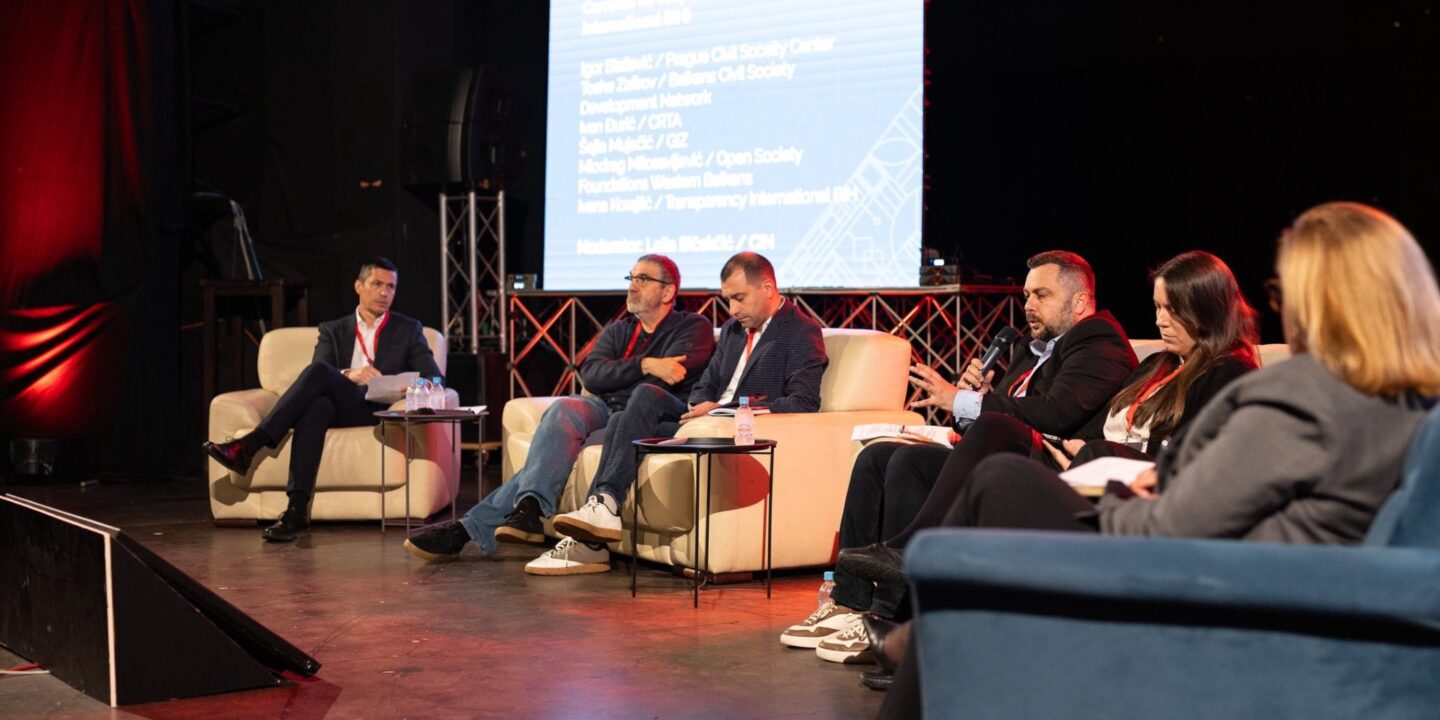
Sarajevo, Bosnia and Herzegovina – The civil society landscape in the Western Balkans is facing unprecedented challenges, a critical issue highlighted at the 13th POINT Conference held in Sarajevo on May 29-30. Toshe Zafirov, Communications and Advocacy Officer for the Balkan Civil Society Development Network (BCSDN), represented the organization at the conference, presenting on the pressing topic: “Civil Society Between a Rock and a Hard Place—How to Navigate the Current Currents.”
Zafirov’s presentation and the subsequent panel discussion underscored the severe pressures on civil society organizations (CSOs) in the region, particularly due to recent funding shifts and political dynamics.

Shockwaves from the USAID Freeze
A key concern raised was the recent freeze of #USAID funding, which has sent “shockwaves” throughout the #WesternBalkans. This abrupt halt has immediate and devastating consequences:
- Disruption of Critical Programs: Essential programs supporting anti-corruption efforts, women’s empowerment, youth initiatives, and human rights are being severely impacted.
- Layoffs and Program Suspensions: Across the region, CSOs are forced to lay off staff and suspend vital programs, directly affecting the communities they serve.
- Threat to Survival: The funding freeze isn’t just about financial cuts; it directly threatens the survival of small and community-based organizations, many of which are on the front lines of democratic development.
- Shrinking Democratic Space: This financial instability, coupled with a rise in smear campaigns against organizations defending human rights and democracy, directly contributes to the shrinking of democratic space in the region.
The EU’s Shifting Approach: Erosion of Local Ownership?
Adding to the complexity, the #EU is reportedly shifting away from direct funding to local CSOs. While the motivations behind this shift were not explicitly detailed, the panel raised concerns about its potential impact:
- Eroding Local Ownership: A move away from direct funding could undermine local ownership of initiatives and reduce the direct impact and transparency of support.
- Challenges to Effective Support: The question remains how to ensure effective and transparent support for civil society when funding mechanisms become less direct.
BCSDN’s Urgent Call to Action
In light of these formidable challenges, BCSDN issued a strong call to action, emphasizing the critical role of civil society in fostering democracy:
- Reasserting Civil Society’s Role: It is crucial to reassert civil society’s role not merely as implementers of projects, but as active shapers of #democracy. CSOs are essential partners in defining and driving democratic processes.

- Civic Space as Non-Negotiable in EU Accession: BCSDN urges everyone to strongly message the EU that civic space must be a non-negotiable condition in EU accession processes for Western Balkan countries. A thriving civil society is fundamental to a healthy democracy and should be a core criterion for integration.
- International Solidarity and Donor Accountability: There is a clear need for increased international solidarity with Western Balkan CSOs, greater donor accountability in their funding strategies, and robust political recognition of the immense value CSOs bring to their societies.
- Civic Resistance is Growing: Despite the “bad times” that may be coming, BCSDN highlighted a powerful counter-narrative: civic resistance is already here, and it is growing stronger. This resilience and determination are vital in navigating the current currents and pushing back against the erosion of democratic values.

The insights from the 13th POINT Conference serve as a stark reminder of the precarious position of civil society in the Western Balkans and the urgent need for concerted efforts to safeguard and strengthen democratic spaces in the region.