
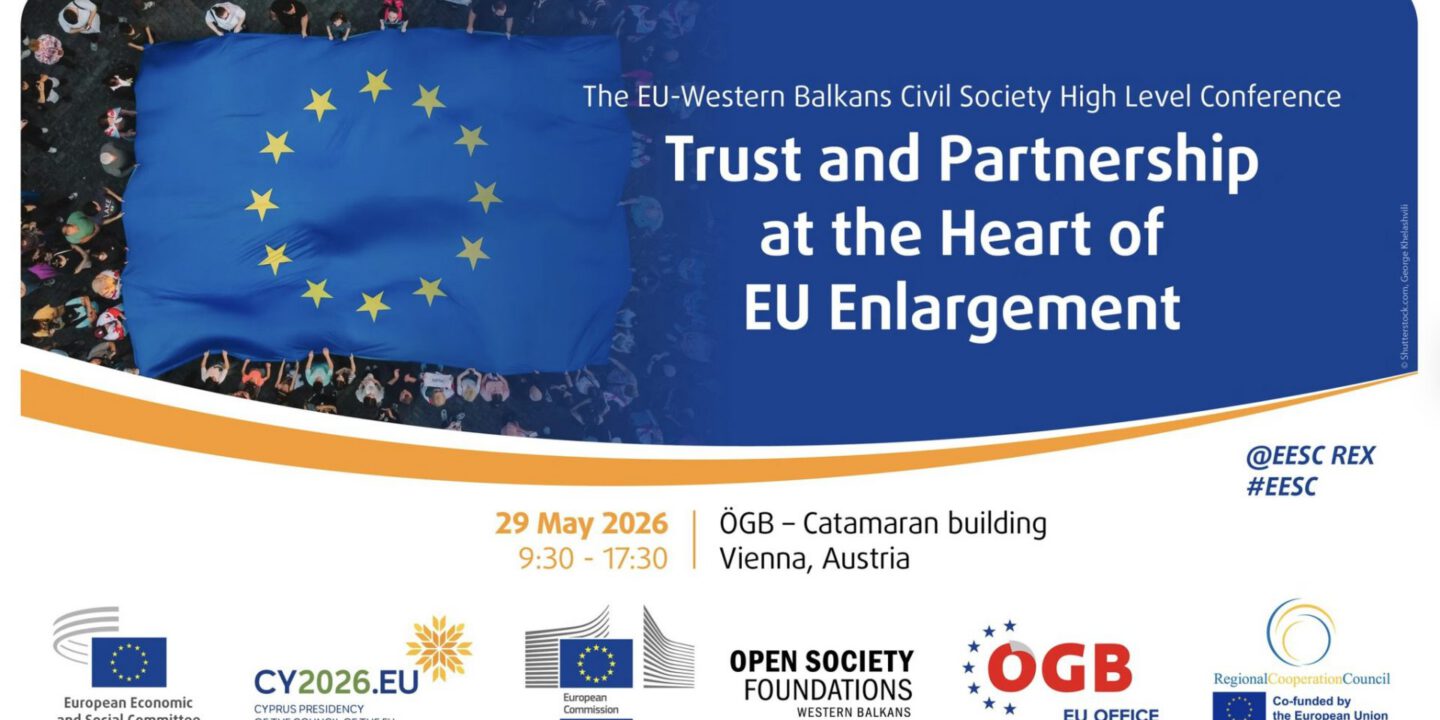
On 29 May 2026, BCSDN participated in the EU–Western Balkans Civil Society High-Level Conference, organised by the European Economic and Social Committee (EESC) in Vienna under the auspices of the Cyprus Presidency of the Council of the EU. Bringing together more than 100 representatives of EU institutions, governments, CSOs, social partners, regional organisations, and policy experts, the conference focused on the role of civil society in advancing EU enlargement, strengthening democratic resilience, and supporting socio-economic convergence across the Western Balkans. Speakers from the Cyprus Presidency, the European Commission, the EESC, and Austrian authorities highlighted enlargement as a strategic priority for Europe’s security, prosperity, and democratic resilience.
Under the theme “Trust and Partnership at the Heart of EU Enlargement”, discussions explored the relationship between enlargement and European security, the implementation of the EU Growth Plan for the Western Balkans, and the future Multiannual Financial Framework (MFF). A recurring message was that enlargement must remain a credible, merit-based process supported by strong democratic institutions, meaningful citizen participation, and an enabling environment for civil society.
Opening discussions highlighted the growing strategic importance of the Western Balkans for Europe’s stability and security, while stressing that democratic reforms, rule of law, media freedom, and protection of fundamental rights remain essential foundations of the accession process. Speakers also underlined the need to strengthen democratic resilience against disinformation, foreign interference, and declining public trust in institutions.
The afternoon sessions focused on the implementation of the Growth Plan and the future of EU funding for the region. Discussions explored how reforms can deliver tangible benefits for citizens and how CSOs, social partners, and local actors can contribute to more effective monitoring, implementation, and accountability of reform processes.
Civil Society Calls for Stronger Participation, Protection, and Support in the Enlargement Process
Representing BCSDN, Board Chair Klotilda Kosta, Director of Programs at Partners Albania for Change and Development, highlighted the essential role of civil society in advancing democracy, rule of law, and fundamental rights across the Western Balkans. She underscored BCSDN’s unique contribution as a regional network bringing evidence-based recommendations on civic space, funding, and civil society sustainability to EU institutions. Drawing on findings from BCSDN’s Monitoring Matrix, she noted that while legal frameworks across the region broadly recognise civil society, organisations continue to face shrinking civic space, implementation gaps, and growing financial insecurity. Kosta stressed that socio-economic convergence cannot be measured through economic indicators alone, but also depends on strong democratic institutions, independent media, protection from disinformation, fundamental rights, and citizens’ trust in the European perspective.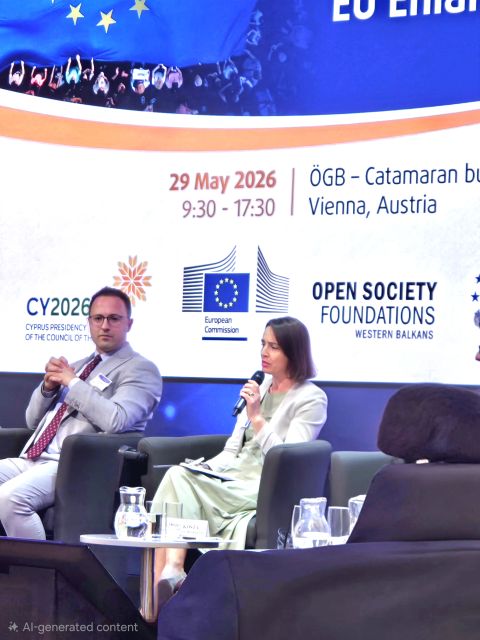
Referring to the upcoming EU Civil Society Strategy, the European Democracy Shield, and negotiations on the next Multiannual Financial Framework (MFF), she noted that these initiatives present an opportunity to move from discretionary engagement towards more institutionalised participation, stronger civic space safeguards, and democratic conditionality. She further called for future EU funding instruments, including Global Europe and AgoraEU, to provide stronger and more predictable support for civil society and ensure its meaningful involvement in the design, implementation, and monitoring of enlargement policies and democratic reforms.
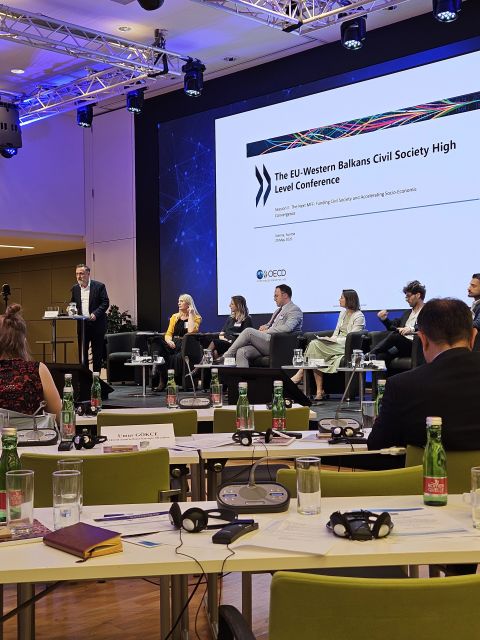
BCSDN members’ representatives also contributed actively to the discussions. During the session on the future MFF, Aida Daguda, Executive Director of the Center for Civil Society Promotion (CPCD), called for a stronger and more strategic partnership between the EU and civil society, stressing that genuine convergence should be measured not only through economic indicators, but also through democratic participation, quality of governance, and citizens’ trust in institutions. Juliana Hoxha, Executive Director of Partners Albania, highlighted the need to move beyond treating civil society as a monitoring actor and ensure its meaningful involvement in shaping reforms. Dren Puka, Executive Director of KCSF, raised concerns over the often inconsistent and difficult-to-follow participation of civil society in Reform Agendas, Stabilisation and Association structures, and other enlargement-related processes.
Looking Ahead: Priorities for Enlargement and Democratic Resilience
Many of advocacy priorities advanced by BCSDN and its members were reflected in the conference conclusions adopted by participants. These included calls for stronger protection of civic space, structured and institutionalised civil society participation in enlargement processes, dedicated and predictable funding for civil society and independent media, greater transparency and accountability in the implementation of the Growth Plan, and the recognition of civil society engagement as a necessary condition for sustainable reforms and democratic resilience. The conclusions also emphasised the need for a clearly identifiable enlargement funding architecture within the next MFF and dedicated support for advocacy, watchdog, monitoring, and civic participation functions.
For BCSDN, the conference provided an important opportunity to bring evidence and recommendations from the region directly into ongoing European discussions on enlargement, democratic resilience, and the future of EU support for civil society. As the EU prepares its next funding cycle and develops new initiatives on democracy and civil society, ensuring meaningful participation of civic actors from the Western Balkans will remain essential for a credible and transformative enlargement process