
At the core of BCSDN's monitoring work is the Monitoring Matrix on Enabling Environment for Civil Society Development, developed in 2013 as a common regional framework for assessing the conditions in which civil society operates.
The Monitoring Matrix looks at the legal framework and its implementation in practice, covering fundamental freedoms of association, assembly and expression; the financial viability and sustainability of CSOs; and the relationship between civil society and public institutions, including access to information and participation in policymaking. Applied across countries and over time, it provides comparable evidence on progress, persistent challenges and emerging civic space risks.
BCSDN members conduct the monitoring nationally, using the findings to advocate for policy and institutional change in their countries. BCSDN brings this evidence together to identify regional trends and uses it to inform regional, EU and international advocacy. Monitoring Matrix findings regularly contribute to the European Commission's Enlargement Reports and, since 2024, the Rule of Law Reports.
Explore the Monitoring Matrix
The revised Monitoring Matrix Toolkit, introduced in 2024, updated the original methodology to reflect how civic space has evolved — strengthening monitoring of digital threats, SLAPPs and AML/CFT-related pressures, and introducing a stronger gender perspective.

Strengthening the Gender Equality Lens
BCSDN has integrated a stronger gender equality perspective into the Monitoring Matrix, introducing gender-responsive indicators and tools to better capture the specific barriers faced by women's rights and gender equality organisations. The approach builds on BCSDN's regional research which examines how civic space conditions affect these organisations and helps ensure that these differences are reflected in monitoring and advocacy.
Explore the gender research →Deepening Evidence on Emerging Civic Space Threats
Alongside regular monitoring, BCSDN conducts targeted regional research where new or insufficiently documented threats require deeper analysis and coordinated action.
Strategic Lawsuits Against Public Participation – SLAPPs
BCSDN conducted the first regional research on SLAPPs in the Western Balkans, documenting patterns, legal gaps and the impact of abusive legal action on journalists, activists, CSOs and other actors that speak and act in the public interest. As a member of the CASE Coalition Against SLAPPs in Europe, BCSDN also connects developments in the Western Balkans with European advocacy and emerging anti-SLAPP standards.
Explore our work on SLAPPs →AML/CFT and Civil Society
BCSDN produced the first comprehensive regional research on the impact of AML/CFT frameworks on civil society across the Western Balkans and Türkiye, examining their effects on CSO operations, access to funding and financial services, and exposure to disproportionate restrictions. We advocate for risk-based and proportionate approaches that address legitimate risks while safeguarding civic space.
Explore our work on AML/CFT →From Monitoring to Early Action
Monitoring civic space is most useful when risks can be identified before restrictions become entrenched.
Building on more than a decade of Monitoring Matrix evidence and regional cooperation, BCSDN is developing the Regional Civic Space Early Warning System and Response Mechanism to move from documenting restrictions towards earlier identification and preventive action. It connects national monitoring and local intelligence with regional risk assessment and coordinated responses, enabling BCSDN and its members to identify emerging threats, assess their significance and urgency, mobilise regional solidarity and engage relevant national, EU and international actors when earlier action can make a difference.
Explore the Early Warning System →Related News

Serbia’s Students Are Not Giving Up: When Accountability Meets Resistance
Why do citizens continue to mobilise in Serbia, despite mounting pressureand months of uncertainty? In this op-ed, Alma Mustajbašić from BCSDN member organisation Civic Initiatives…
Read more →
Reclaiming the Civic Front: How Serbia’s Mass Mobilization is Redefining Democratic Resilience in the Western Balkans
Photo: A drone view of demonstrators attending a student-led protest demanding snap parliamentary elections in Belgrade, Serbia on May 23 [Djordje Kojadinovic/Reuters] BELGRADE / SKOPJE…
Read more →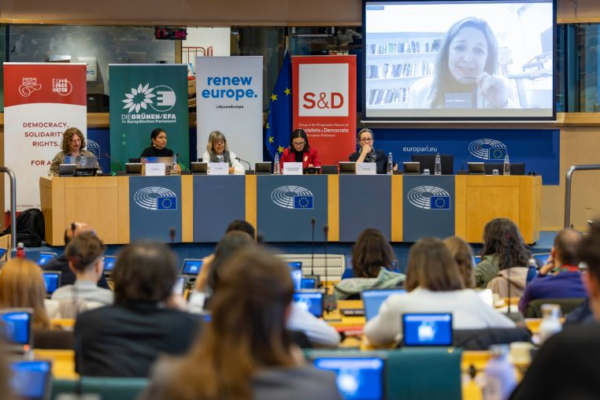
BCSDN at ECF General Assembly and 2026 Civic Space Report Launch
In May 2026, BCSDN participated in two important gatherings in Brussels that brought together CSOs, policymakers, and democracy advocates from across Europe to discuss the…
Read more →
New BCSDN Policy Brief: Civil Society in the Western Balkans & Türkiye in the EU’s Evolving Policy Framework
The European Union is entering a new phase in shaping its democracy instruments and funding framework, including the EU Civil Society Strategy, the European Democracy…
Read more →