
BCSDN's story begins in 2001, in a region emerging from years of conflict and division. As civil society organisations across South-East Europe worked to rebuild connections and strengthen their capacities, regional cooperation offered an important space for exchange, learning and joint action.
Responding to this need for stronger regional connections and cooperation, the Macedonian Center for International Cooperation (MCIC) began implementing the Capacity Building Hub Programme in 2001, a pilot initiative developed within the wider World Council of Churches South-East Europe Ecumenical Partnership. Bringing together churches, faith-based and ecumenical organisations, and civil society organisations from across the region, the programme created space for exchange, learning, and cooperation across borders.
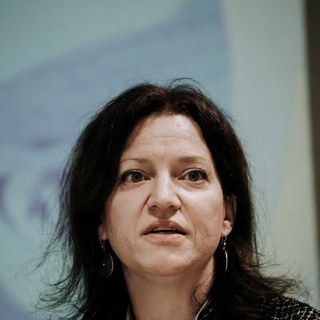
"In the years after the end of conflicts and wars in the Balkans, the network demonstrated in practice that there are local capacities, knowledge, and skills that can drive the rebuilding and development of the Balkan region."
Tanja Hafner Ademi, BCSDN's first Executive Director
The relationships established through the programme soon developed into a more permanent regional partnership. Through trainings, exchanges and study visits, organisations facing similar challenges in societies undergoing democratic transition built connections that extended beyond the original programme. In December 2003, BCSDN was launched as an informal regional network.
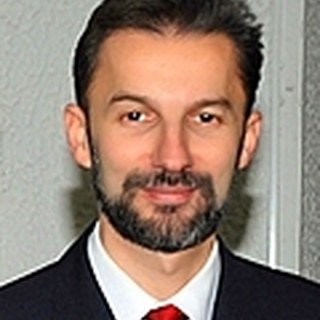
"We had a mission to establish the network and to identify potential members in each country outside of ecumenical partners. Through that process, we identified the initial members of the network."
Aleksandar Krzhalovski, Executive Director, MCIC
Over the following years, BCSDN evolved from its initial capacity-building focus towards strengthening civil society's collective voice and influencing the policies and conditions affecting its work. In 2009, the network held its Founding Assembly in Skopje and formally established itself, strengthening its regional and EU-level advocacy.
A major step came in 2013 with the development of the Monitoring Matrix on Enabling Environment for Civil Society Development, establishing a common regional approach to monitoring and strengthening BCSDN's evidence-based advocacy at national, regional and EU levels.
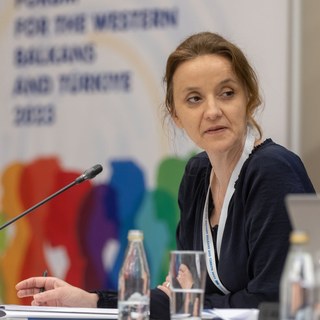
"With BCSDN, we grew and developed together as an organization. The membership brought us an exchange of knowledge and experiences with colleagues from the region, joint work, and advocacy for civil society at the regional and European level, improvement of the environment for CSOs in Montenegro through good comparative practices in legislation and procedures."
Zorana Markovic, Executive Director, CRNVO
As pressures on civic space increased, BCSDN expanded its role from monitoring and advocacy to supporting civil society more directly. In 2019, with support from Sida, it established the Regional Civil Society Development Hub, providing flexible support for CSOs, regional initiatives and rapid responses across the Western Balkans.

"Civil society is national but even more universal. In our joint work, we have come to realize that bad examples in limiting the civic space easily penetrate our borders. Only by standing together, we can generate our alternatives to defend civic space, in our countries and beyond."
Taulant Hoxha, Former Executive Director, KCSF
More than two decades later, BCSDN has grown from a capacity-building initiative into a regional network connecting national expertise, regional cooperation and European and international policy influence. The context, partnerships and tools have evolved, but the principle behind the Network remains closely connected to where it started: working across borders to address challenges that civil society cannot tackle alone.