
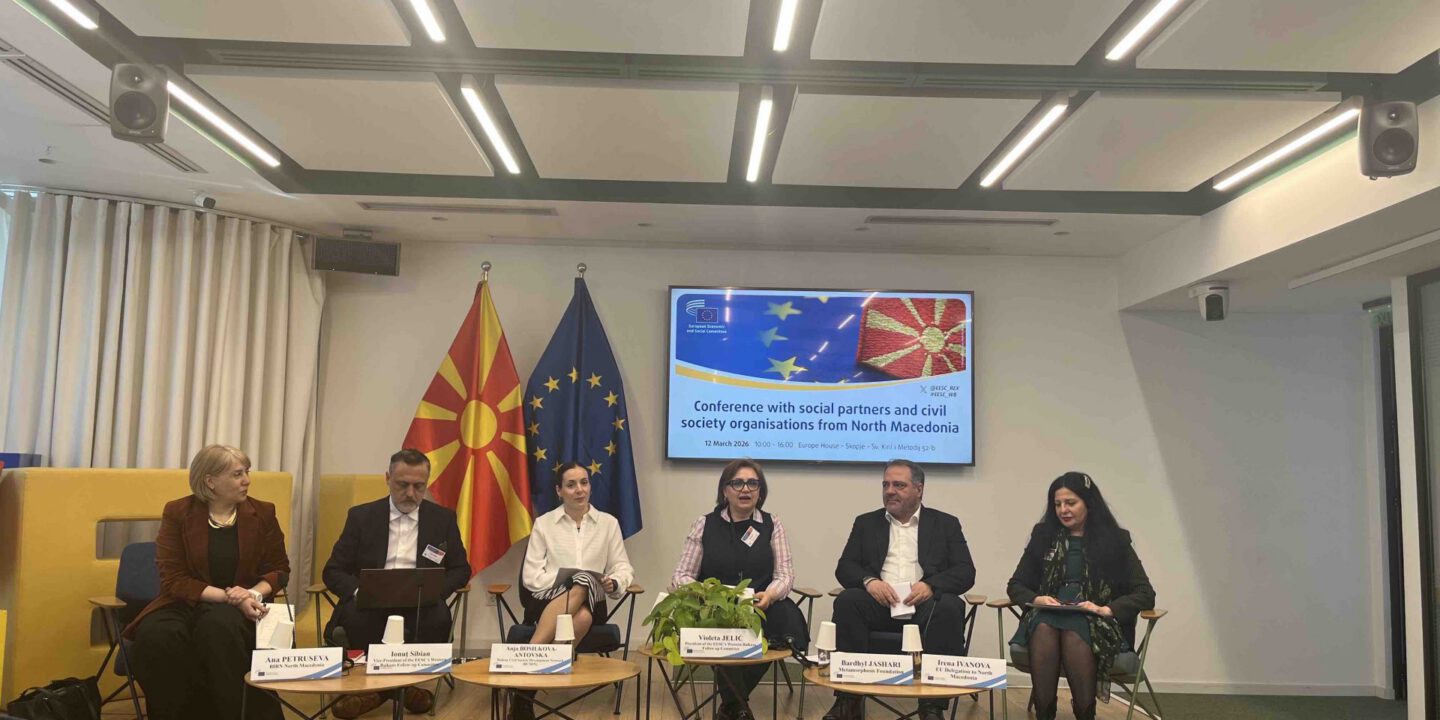
On 12 March 2026, the European Economic and Social Committee (EESC) organised a conference in Skopje bringing together representatives of CSOs, social partners, EU institutions and national authorities to discuss key priorities related to North Macedonia’s EU accession process. Hosted at Europe House Skopje, the event focused on the role of organised civil society in accession negotiations and the implementation of the Reform Agenda, the state of social dialogue and business community engagement, as well as the protection of civic space, freedom of expression and efforts to counter disinformation.
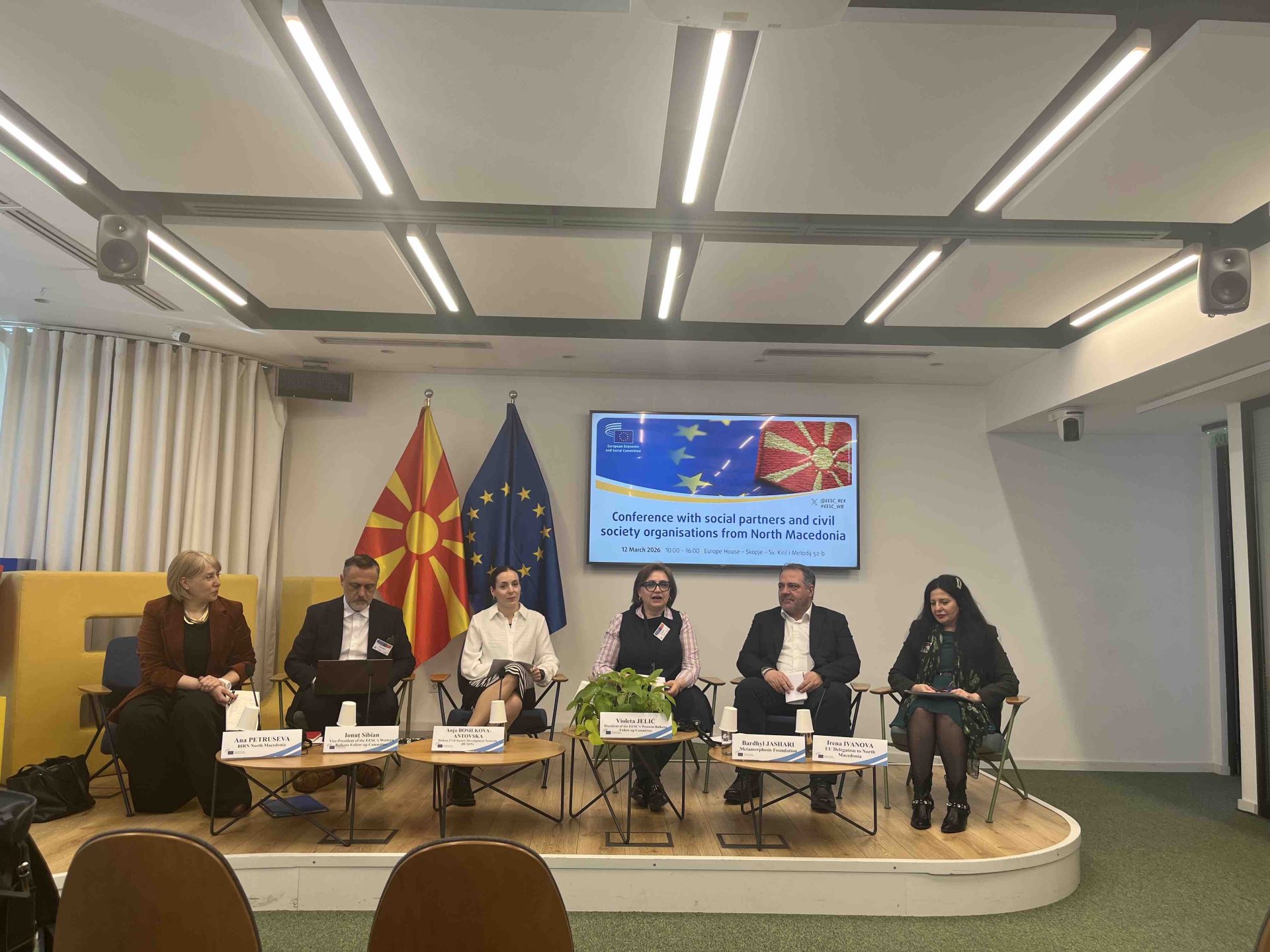
BCSDN participated in the afternoon session on “Enabling civic space, freedom of expression and the fight against disinformation,” where Acting Executive Director Anja Bosilkova-Antovska highlighted the importance of safeguarding civic space as a key condition for democratic resilience and progress in the EU accession process.
In her remarks, Bosilkova-Antovska noted that while fundamental freedoms such as association, expression and assembly are legally guaranteed in North Macedonia, challenges remain in their practical implementation. She pointed to increasing pressure on journalists and investigative reporters, including recent court rulings that raise concerns about the protection of journalistic work and freedom of expression, underlining the need for stronger safeguards for civic actors and media professionals.
She also addressed structural challenges affecting civil society, ,,Overall, the legal framework in North Macedonia broadly guarantees civic freedoms, but the practical enabling environment remains fragile, particularly regarding financial sustainability, protection of watchdog actors, and consistent inclusion of civil society in decision-making processes.” This matters because civic space is not only a civil society issue. It is increasingly an indicator of rule-of-law performance and reform credibility in the accession process.
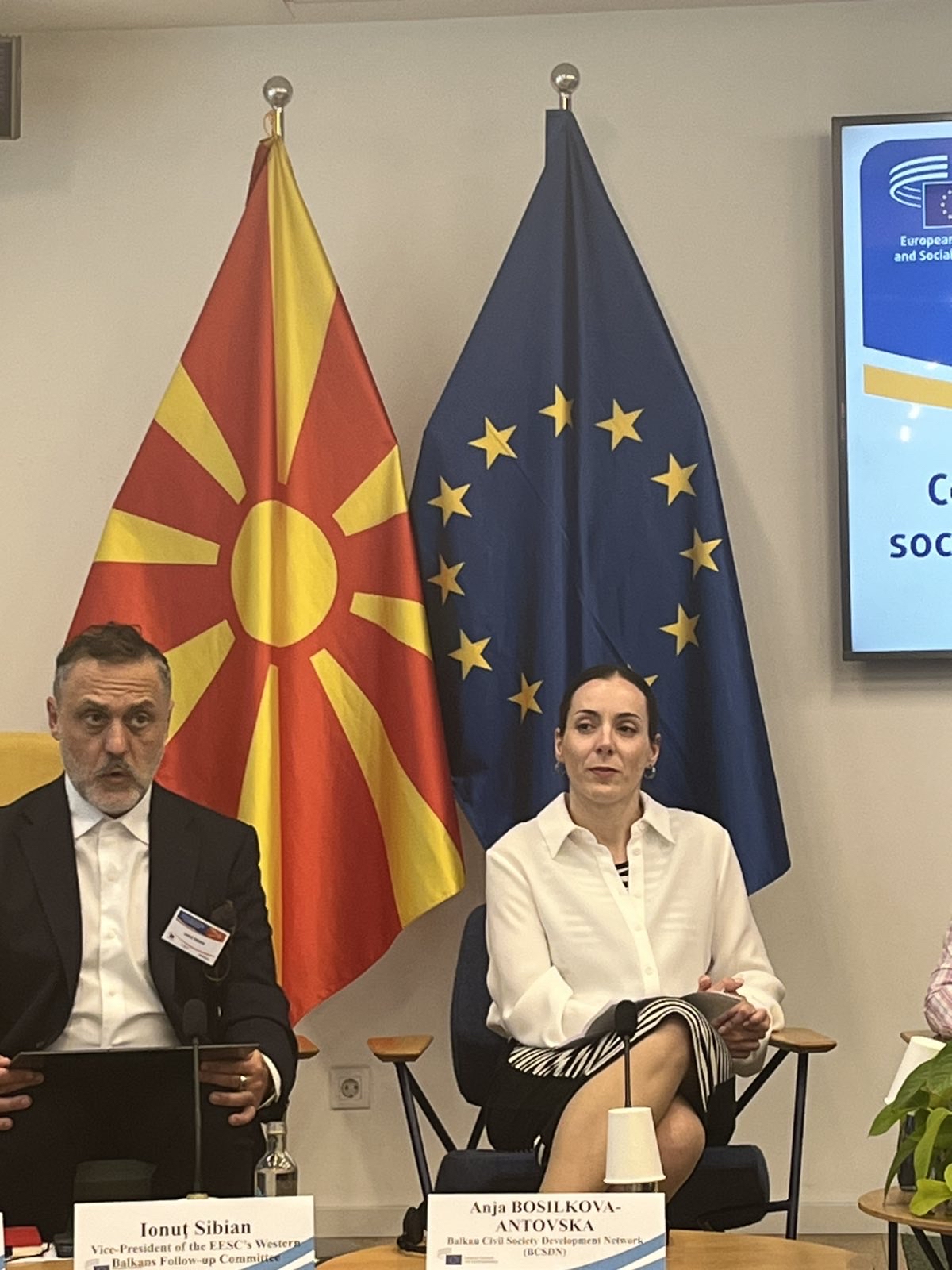
At the same time, draft amendments to the Law on Associations and Foundations have recently been opened for public consultation, signalling renewed efforts to modernise the regulatory framework governing the sector. While some positive developments have emerged—such as the adoption of a new strategy for cooperation with CSos and the reconstitution of the Council for Cooperation with Civil Society, Bosilkova-Antovska stressed that meaningful progress will depend on the effective implementation of these commitments, stronger transparency in legislative processes and more consistent opportunities for civil society participation in policymaking.
The discussion also addressed broader regional challenges, including the spread of disinformation and increasing pressure on journalists and activists across the Western Balkans. Together with representatives from BIRN North Macedonia and the Metamorphosis Foundation, the panel emphasised the importance of cooperation between civil society, media and institutions to defend democratic values and strengthen media literacy.
Participants agreed that civil society must play an active role not only in monitoring reforms but also in contributing to the implementation of the Reform Agenda and the broader European integration process. Ensuring an enabling environment for civil society, media freedom and public participation remains essential for strengthening democratic resilience and maintaining the credibility of North Macedonia’s EU accession path.
The conference brought together senior representatives from national authorities, including First Deputy Prime Minister and Minister of European Affairs Bekim Sali, as well as representatives from the EU Delegation and the EESC. The event concluded with a call for continued dialogue between institutions, social partners and civil society to support democratic reforms and advance North Macedonia’s European integration.