
Skopje, North Macedonia – June 2, 2025 – Over 80 civil society representatives gathered in Gevgelija for Civica Mobilitas’ annual Networking Meeting (June 25-27, 2025). The event aimed to boost collaboration and formulate proposals to enhance local democracy, particularly in anticipation of upcoming local elections. A core focus was the revitalization of the Civic Platform, envisioned as a mechanism to unify the civil sector and amplify its voice in public policy. Attendees engaged in discussions with key figures, including Swiss Ambassador H.E. Veronique Ullmann, Minister of Local Self-Government Zlatko Perinski, and ZELS Deputy Director Ardita Dema Mehmeti.
Key Discussions and Outcomes: Building Bridges for Democracy
Strengthening the Council for Cooperation with Civil Society:
Participants underscored the Council for Cooperation with and Development of the Civil Sector as a vital mechanism for institutional dialogue. Nikica Kusinikova, Council President and Konnekt Executive Director, asserted its role as a continuous advocacy tool, not merely for crisis situations. “In the Council, I don’t represent just my organization—but the entire sector. I want information about the Council’s work to reach as many organizations as possible, and for each of them to have the opportunity to get involved,” she stated, emphasizing the push for greater transparency and engagement. Valentina Velichkovska from the Civic Resource Center aptly described the Council as a “bridge” between organizations and institutions, noting that a recent survey found 56% of CSOs consider it relevant. Suggestions for improvement included monthly bulletins to enhance communication and increase accountability.

The Imperative for a Unified Civil Society Platform:
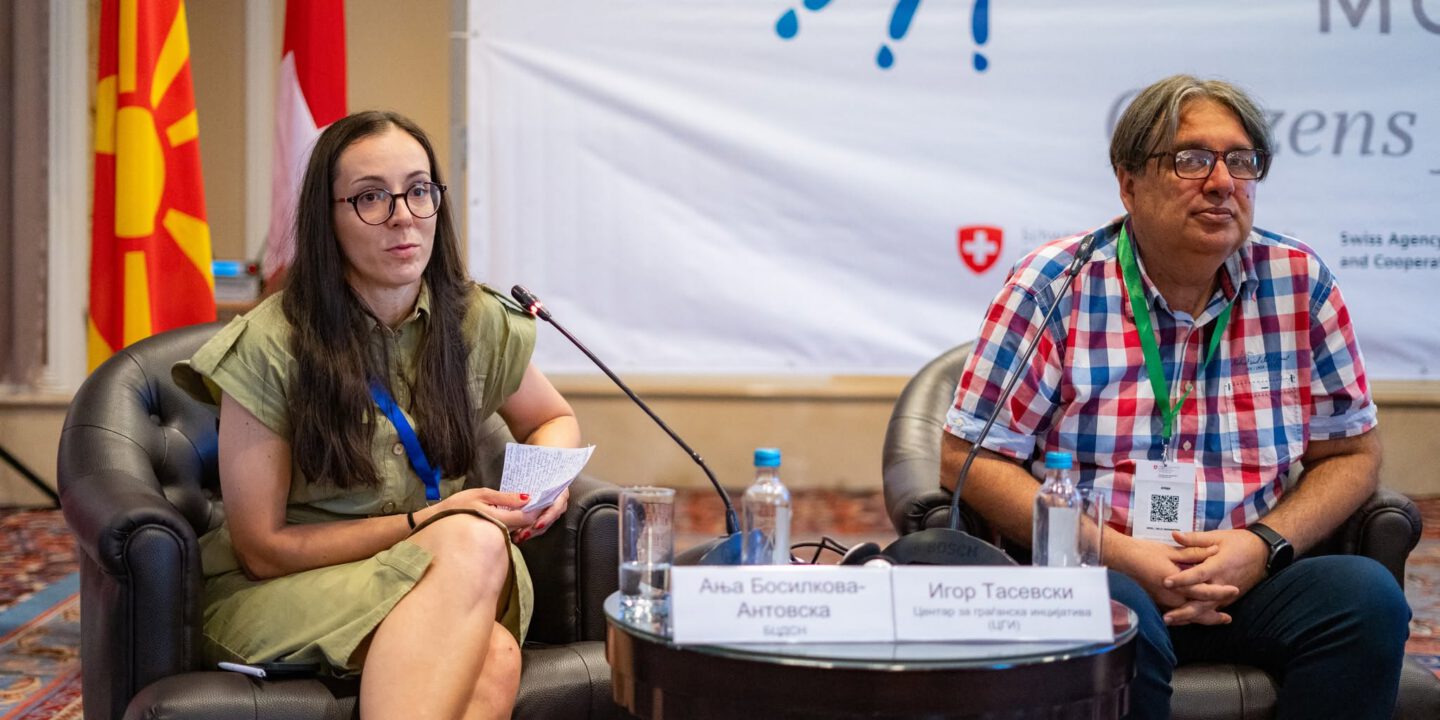
A significant discussion centered on creating a robust civil society platform. Anja Bosilkova-Antovska of the Balkan Civil Society Development Network (BCSDN) highlighted the successful models of regional civil society associations, including BCSDN’s own operations, and pointed to effective platforms across the broader region. Gonce Jakovleska from Civica Mobilitas explained the impetus: “Growing calls for solidarity in the civil sector and the need for mutual support motivated us to open the question of building a platform in this forum.”
Experiences from the Macedonian Civic Platform (GPM), established in 2004, were shared. Igor Tasevski (CGI-Prilep) and Lulzim Haziri (ADI-Gostivar), who previously hosted the GPM Secretariat, detailed its achievements in coordination, advocacy, and capacity building. Tasevski affirmed, “The platform was an important driver for transparency, good governance, and democratic dialogue, and many of its achievements remain a vital foundation for CSO functioning today.” Haziri passionately articulated the current need: “Despite numerous thematic networks, Macedonia lacks a unified voice for civil society. This is the key challenge—to create a platform that merges these diverse voices into a strong, coherent front for more effective advocacy.”

Trust and Practical Local Governance Experiences:
Fania Ivanovska (MCMS) presented Civica Mobilitas’ research findings on public trust in civil society. Petrush Toines provided a refresher for grantees on Political-Economic and Power Analysis (PEPA) from the previous meeting. UNDP’s Lejla Nebiu and NDI’s Blagorodna Shopova showcased their municipal projects, focusing on strengthening municipal councils and fostering “Integrity-Driven Communities.” Participants consistently highlighted institutionalized dialogue, transparent funding, and citizen involvement as foundational elements for effective local governance. Grantees, including Sabina Fakik (Center for Civil Communications), Marjan Glavinchevski (IPO “Krste Jon Struga”), Marjana Janchevska (Metamorphosis), and Ivana C. Stojcheva (HZ “Majka” Kumanovo), shared valuable insights from their direct experiences with local authorities.

Official Perspectives: A Shared Vision
Minister Zlatko Perinski (Local Self-Government):
Minister Perinski outlined upcoming amendments to the Law on Local Self-Government, focusing on digitalization, unified municipal web platforms, and a new municipal development index. He emphasized the government’s commitment to CSO inclusion through council initiatives. “Due to the high 10% threshold, proposals and initiatives from citizens are rarely considered. Therefore, we decided to reduce that threshold to 5%,” Perinski announced, noting that the proposal for mandatory public council work originated from civil society.
Ambassador Veronique Ullmann (Switzerland):
Drawing on Switzerland’s experience, Ambassador Ullmann underscored that decentralization fosters democracy and that robust cooperation between CSOs and local authorities is vital. “We believe it’s better to organize together to influence and find solutions to problems. This dialogue is crucial; democracy doesn’t function without dialogue. Democracy requires connection,” she stated.
Ardita Dema Mehmeti (ZELS Deputy Director):
Dema-Mehmeti candidly acknowledged, “Fiscal decentralization is our biggest pain.” However, she expressed optimism that “community forums are recognized and will be part of the new Law on Local Self-Government.” She thanked the Swiss Embassy for supporting ZELS’s institutionalization efforts and expressed hope for future joint endeavors in implementing these forums, offering readiness to collaborate on local CSO funding criteria.
Conclusion: A Path Towards Inclusive Democracy
Discussions also addressed the uneven distribution of budget funds between sports clubs and CSOs (Roberto Parizov, Eco-Life) and the critical need for increased investment in regional development and improved living conditions in rural areas (Liljana Jonoski, Rural Coalition). The meeting concluded with a powerful message: lasting change and the construction of a more inclusive and accountable local democracy can only be achieved through sustained cooperation, open dialogue, and coordinated civil society activities.