
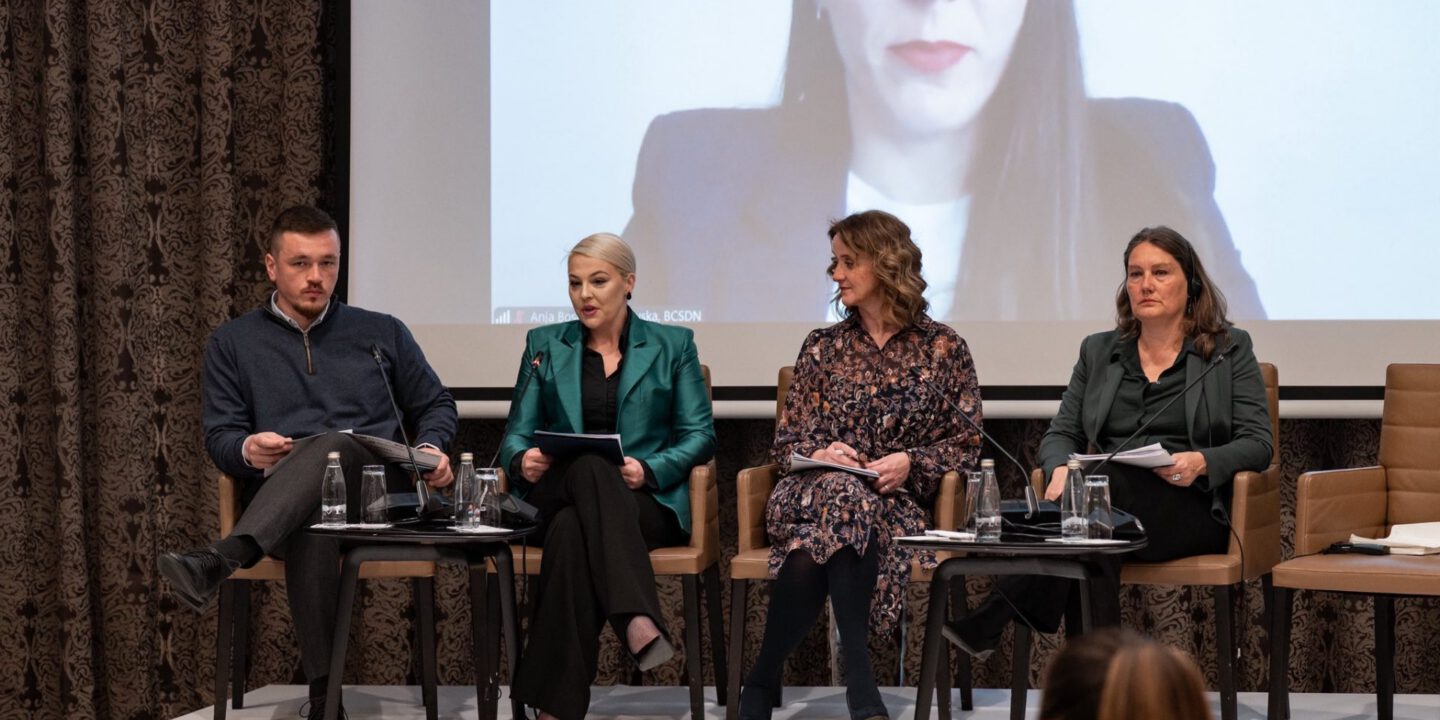
On March 25, BCSDN member, the Center for Development of Non-Governmental Organizations (CRNVO) organized a high-level consultative meeting in Podgorica titled “Law on NGOs – Development or Control?”. The event brought together key stakeholders from the Montenegrin government, the European Union, and civil society to discuss the potential impacts of the new draft legislation on the country’s civic space.
A Critical Turning Point for Civil Society
The meeting opened with remarks from Zorana Marković (CRNVO), Liselotte Isaksson (EU Delegation to Montenegro), and Ernad Suljević, the Minister of Regional-Investment Development and Cooperation with NGOs. The central debate focused on whether the proposed legal changes would foster a supportive environment for NGOs or serve as a restrictive mechanism for state oversight.
BCSDN’s Perspective: Three Essential Reforms
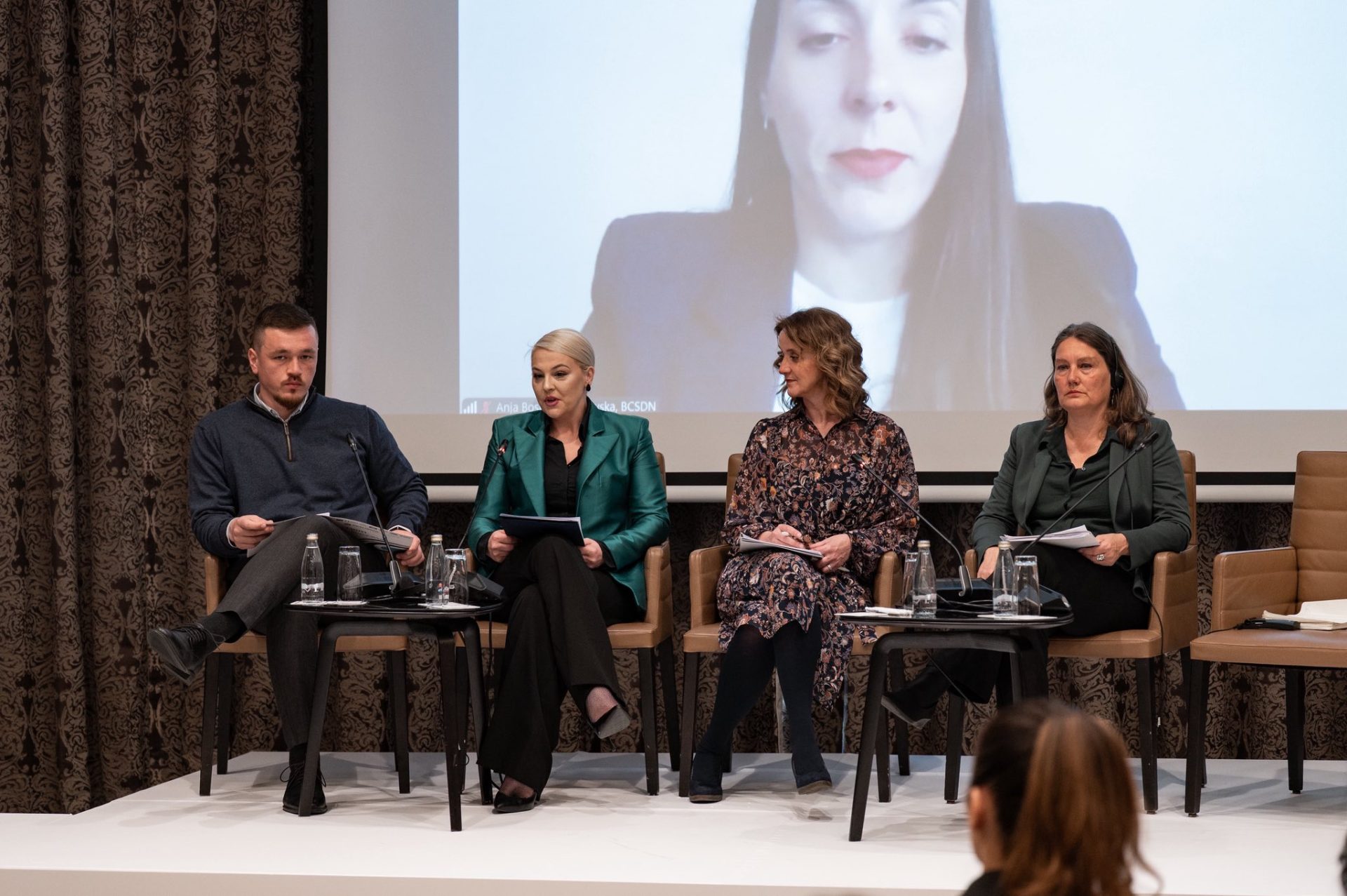
Anja Bosilkova-Antovska represented the Balkan Civil Society Development Network (BCSDN) as a panelist, joining the discussion virtually. During the first panel, she raised critical concerns regarding the draft law’s alignment with international standards, particularly those of the Financial Action Task Force (FATF).
In her address, Antovska-Antovska highlighted a fundamental concern:
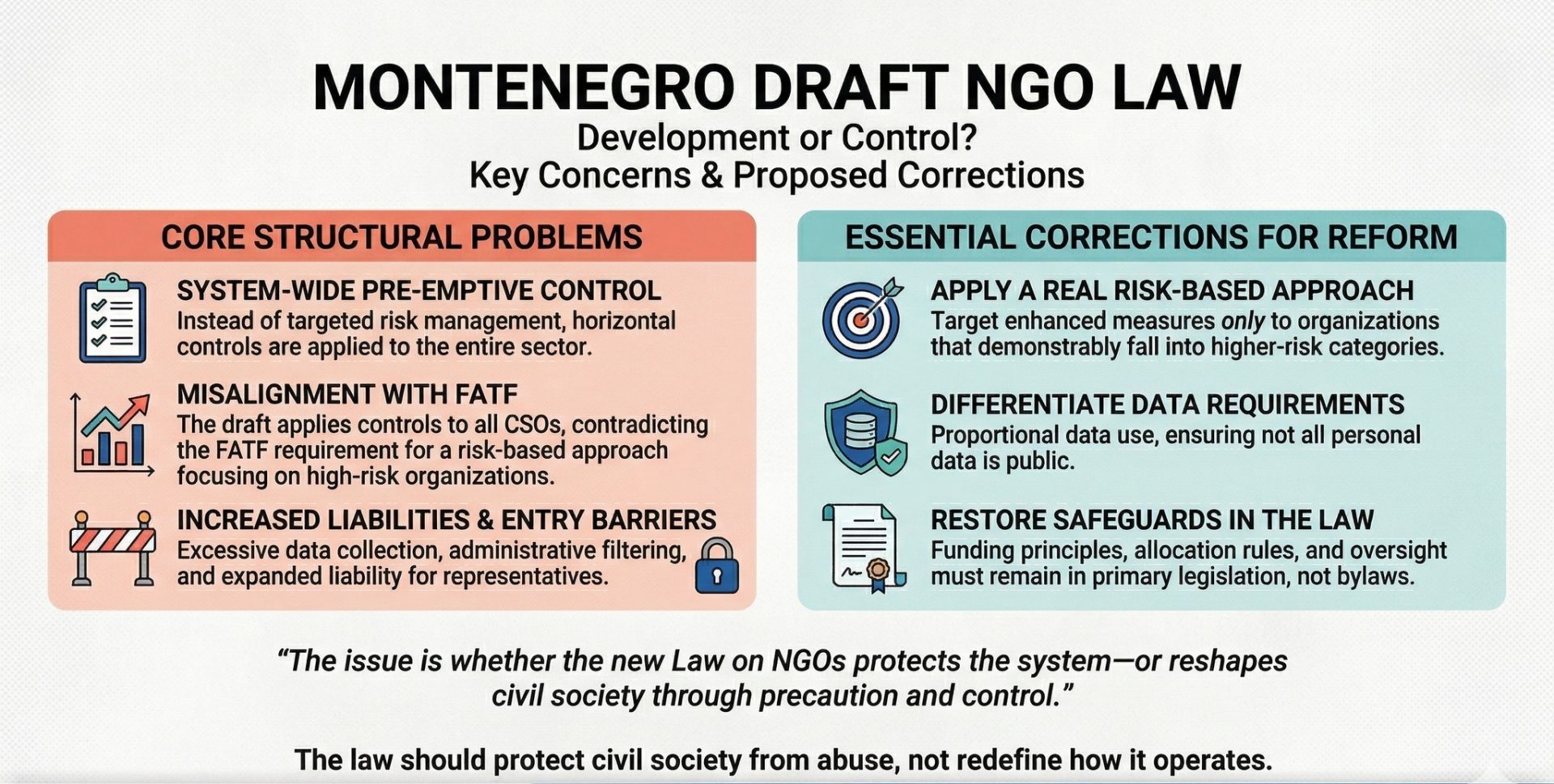
“The issue is whether the new Law on NGOs protects the system—or reshapes civil society through precaution and control. The law should protect civil society from abuse. It should not be used to redefine how it operates.”
To ensure the law supports rather than stifles civil society, she proposed three essential corrections:
-
Adopt a Real Risk-Based Approach: Measures should only be targeted where risk is demonstrably proven, rather than applying horizontal, “one-size-fits-all” controls across the entire sector.
-
Proportional Data Requirements: Data collection and usage must be proportionate and purpose-driven, ensuring that the privacy of organizations and individuals is safeguarded.
-
Anchor Core Safeguards in Primary Law: Essential principles regarding funding, allocation rules, and oversight must remain in the law itself—not relegated to bylaws—to ensure long-term predictability and accountability.
Ongoing Challenges for Civic Space
The second half of the meeting featured representatives from prominent Montenegrin organizations, including Action for Human Rights (HRA), SOS Telephone Podgorica, and UMHCG, who discussed the broader challenges facing activists and civil society in the current political climate.
The event was part of the “Resource Center for Civil Society Organizations in Montenegro – Phase III” project, funded by the European Union.
BCSDN remains committed to monitoring these legislative developments to ensure that Montenegro’s legal framework remains a platform for democratic engagement rather than a tool for administrative restriction.