
(Insights from Balkan Civic Space talks #2)
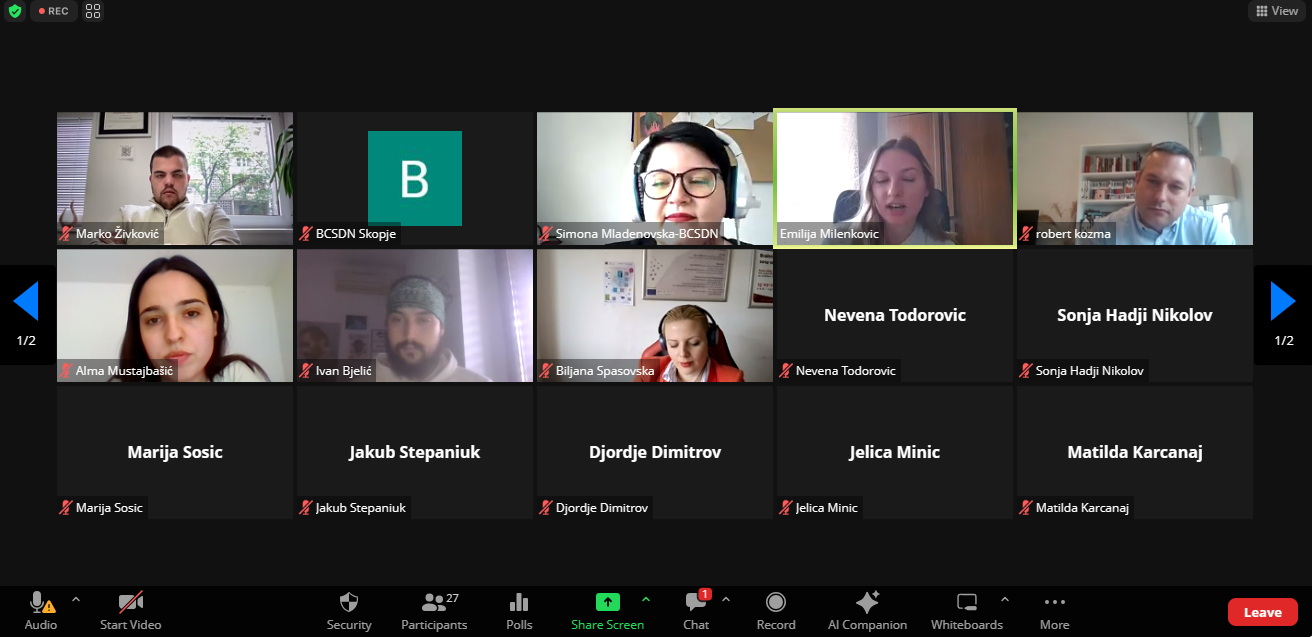
In response to recent threats to civic space and electoral integrity in Serbia, the Balkan Civil Society Development Network (BCSDN) and its member Civic Initiatives organized an online discussion titled “Learning from the Balkans in Election Year: Citizen Mobilization amid Election Irregularities in Serbia.” The event gathered a wide range of audience, including representatives from local, regional, and international CSOs, activists, donors and institutions.
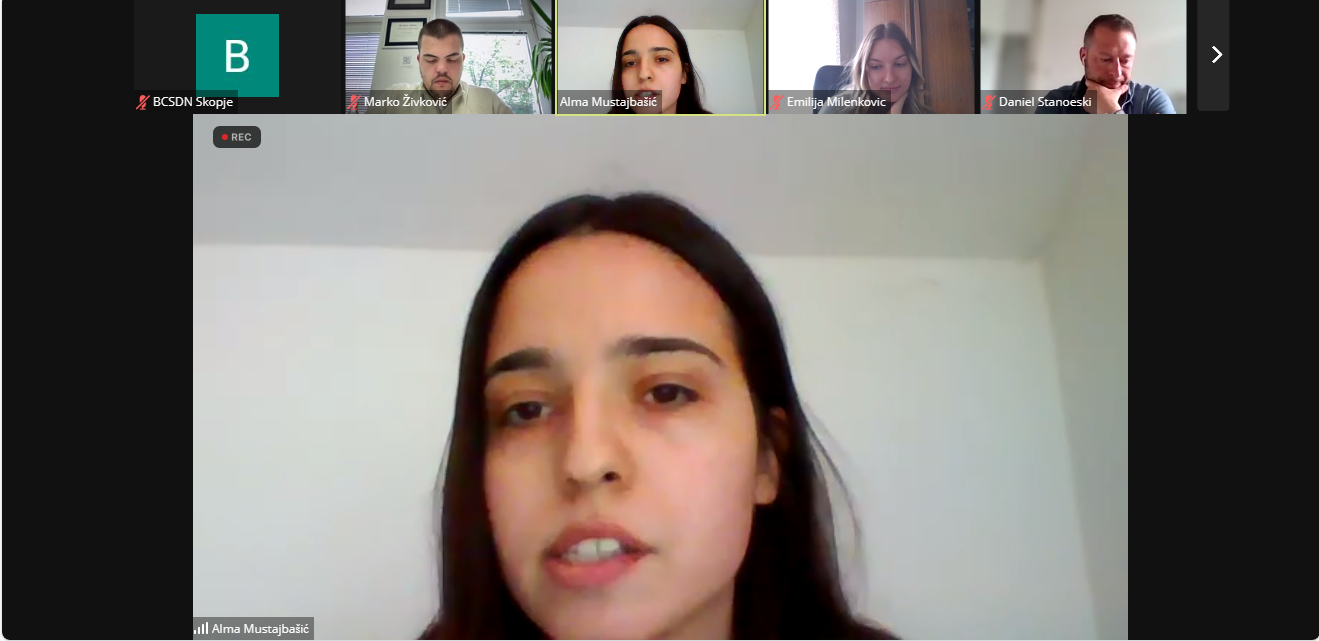
Facilitated by Simona Mladenovska, BCSDN’s Policy and Advocacy Officer, the discussion analyzed the challenges faced during elections, leading to citizen mobilization and advocacy amidst government smear campaigns and stigmatization of CSOs and activists. Insights into the citizens’ uprising the ongoing struggle to protect civil rights amidst oppression were provided by Alma Mustajbašić and Marko Živković from Civic Initiatives, and Robert Kozma, an activist and Green Left Front representative in the National Assembly. Alongside them, Emilija Milenković, a student activist from Borba, and Ivan Bjelić from the SviĆe initiative and Youth Representative in the Government’s Youth Council contributed valuable perspectives during the event, sharing stories from their experiences on the ground.
Youth Resilience in Response to Attacks on Basic Freedoms
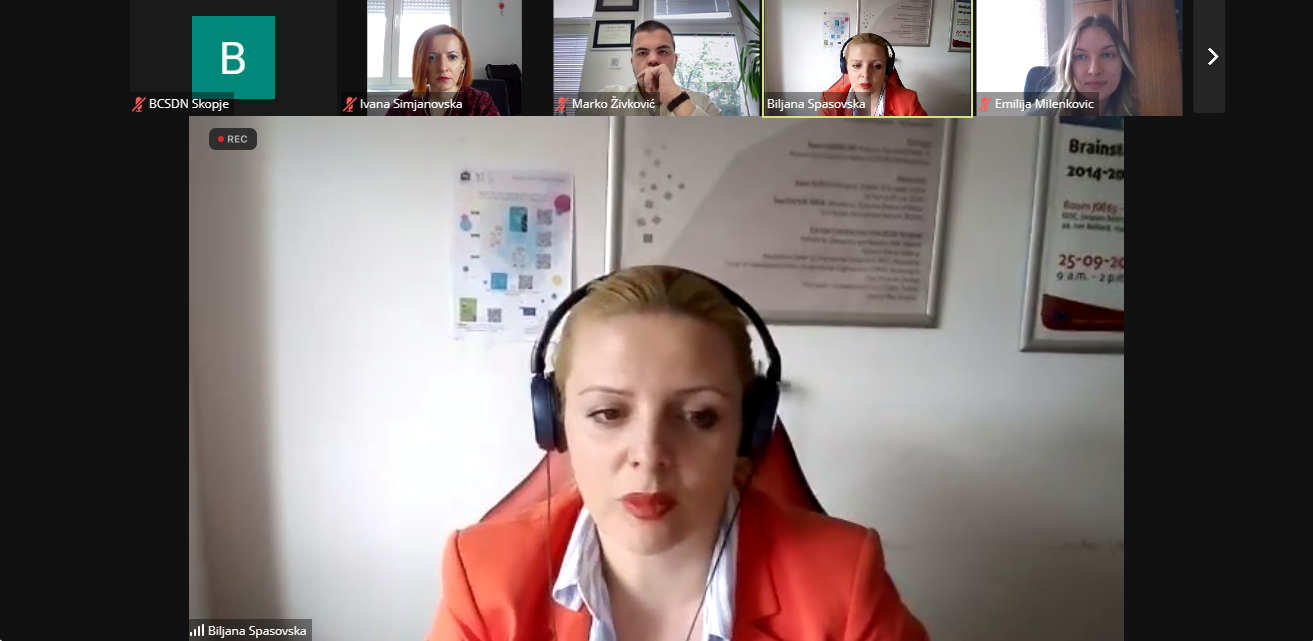 The discussion was opened by Biljana Spasovska, BCSDN Executive Director, who pointed to the resilience of Serbian society and its response to the urgent need to protect civic space and democracy amid irregularities.
The Serbian early elections reveal authoritarian tendencies of the ruling regime, using oppressive methods to maintain control. In their Three Freedoms Under Magnifying Glass, Civic Initiatives report on severe attacks on freedoms of association, expression, and civic engagement, including voting manipulation, vote buying, cases of ballot box stuffing, as well as residency changes before the election, alongside verbal and physical assaults on dissenting voices, notably youth activists in the post-election period. The government intensified its negative campaign against civic activists through pro-regime media. Civil society faced cyber-attacks, marking the first of their kind and indicating state-sponsored digital threats against activists. The aim of these activities was to intimidate activists and foster fear among citizens, particularly those in smaller cities peacefully participating in the democratization process.
Human rights violations peaked during a protest in Belgrade, with clashes between activists and the police. Excessive force led to detentions and house or dorm custody of activists. Despite the attacks, organizations, and initiatives like Borba, Proglas, and CRTA (Center for Research, Transparency and Accountability) showed resilience, emphasizing the importance of citizens’ mobilization during political turmoil. Unlike in previous elections, where citizens remained silent, this time they joined forces, led joint campaigns, and empowered apolitical youth, fostering positive change in Serbian society.
From Street Protests to Institutionalized Response
 Despite the citizens’ uprising, a critical component was missing: the institutional response and international pressure. The advocacy efforts of Serbian CSOs and activists to Brussels was the line that garnered international recognition for the citizens’ struggle for democracy. The response of the international community to vote fraud, led to the adoption of the European Parliament’s resolution pointing to election’s procedural deficiencies. While progress has been made, concerning that the Resolution was adopted by majority of MEPs, still further pressure is needed on the European Commission for their official reaction and support. The OSCE’s Office for Democratic Institutions and Human Rights, ODIHR report on early parliamentary elections in 2023 in Serbia also recognized the electoral irregularities, highlighting systemic issues. Regional and international donors have also shifted their priorities, now providing ad-hoc grants to support civic activists and movements, addressing post-election trends of civil society labeling and ongoing attacks.
The Power of Campaign and What’s Missing?
CSOs in Serbia, including initiatives like Civic Initiatives’ “Ferka” and “Dokle više”, are promoting voter participation and fair elections through various campaigns across the country. These campaigns aim to raise awareness and engage citizens in addressing local issues. While citizens are responding positively, the effectiveness of these efforts is hindered by the lack of coordination among the various campaigns and actors. There is a need for better connectivity and collaboration among these initiatives to maximize their impact.
The Next Steps
The recent Serbian elections highlighted a severe threat to democracy, with violations of basic human rights marked by a lack of accountability among public authorities, reflecting a broader erosion of democratic values. Citizen mobilization faced not only heightened government smear campaigns and targeting of dissent, but also a challenge to European support, portrayed as a threat to Serbian sovereignty. Despite the coalitions and unity among CSOs and activists in addressing injustice and irregularities, uncertainty persists regarding the political authorities’ next moves, hence hampering their coordinated actions.
During the event, potential actions by different actors were discussed, including:
- Serbian activists and CSOs should unify their actions against the regime through coordinated campaigns and protests.
- CSOs and media should continue to report on irregularities and manipulation in the electoral process to raise awareness and exert pressure on the ruling regime.
- Serbian opposition political parties and CSOs should collaborate to devise a strategy for the upcoming local elections to establish a more transparent and fair electoral process.
- The Commission of Electoral Verification should review the electoral lists.
- CSOs should urge the next European Commission to closely scrutinize political events in Serbia.