(Insights from Regional Multistakeholder workshop on SLAPPS)
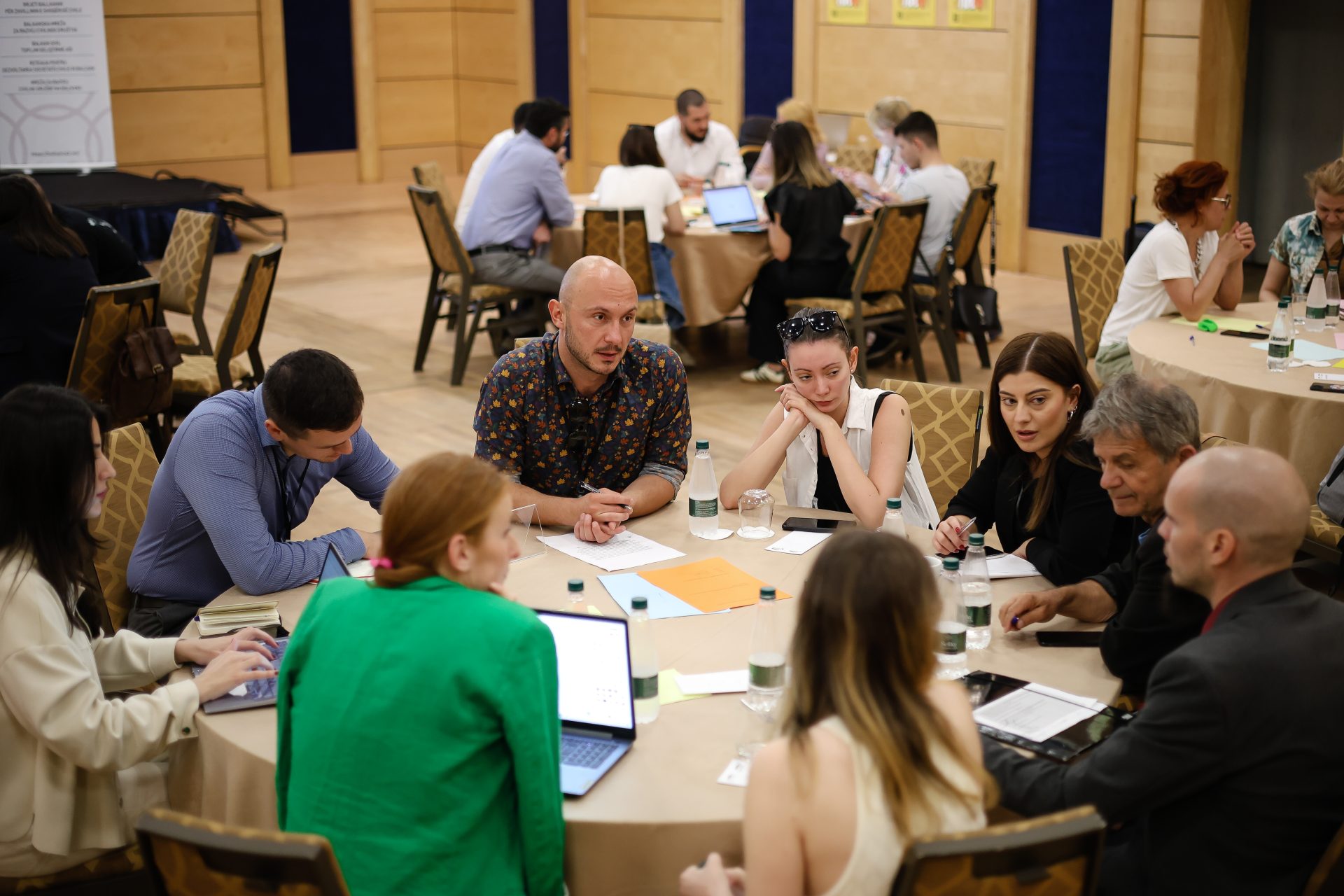
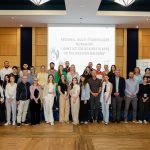
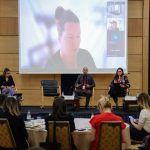
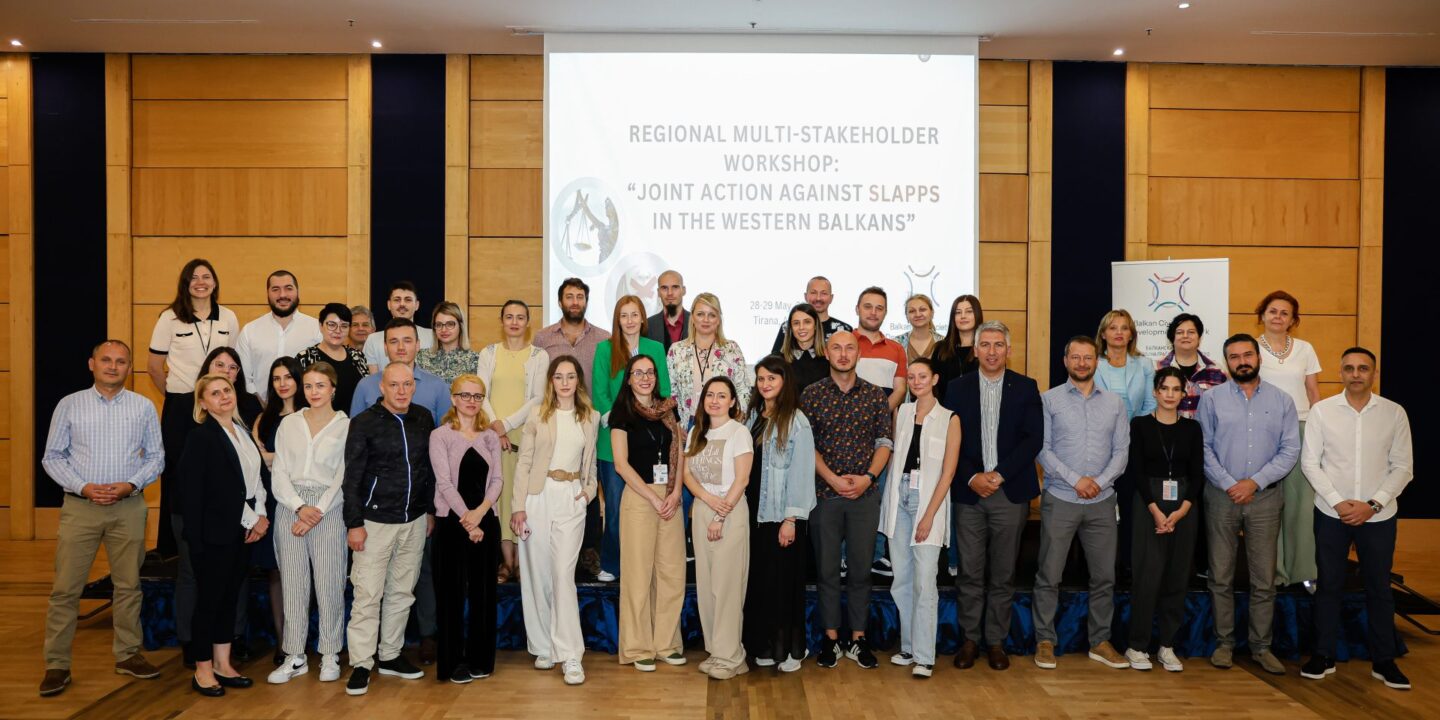
On 28-29 May, the Balkan Civil Society Development Network (BCSDN) organized the SLAPPs (Strategic Lawsuits Against Public Participation) Multistakeholder Workshop in Tirana. The event brought together wide array of CSOs’ representatives, activists, journalists, mediа workers and legal experts from the Western Balkans and EU. The workshop aimed to address the increasing SLAPP threats to freedom of expression and public participation in the region by developing effective strategies to combat this trend and protect fundamental rights.
Personal Stories Highlighting the Impact of SLAPPs
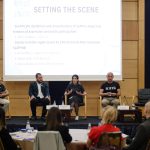
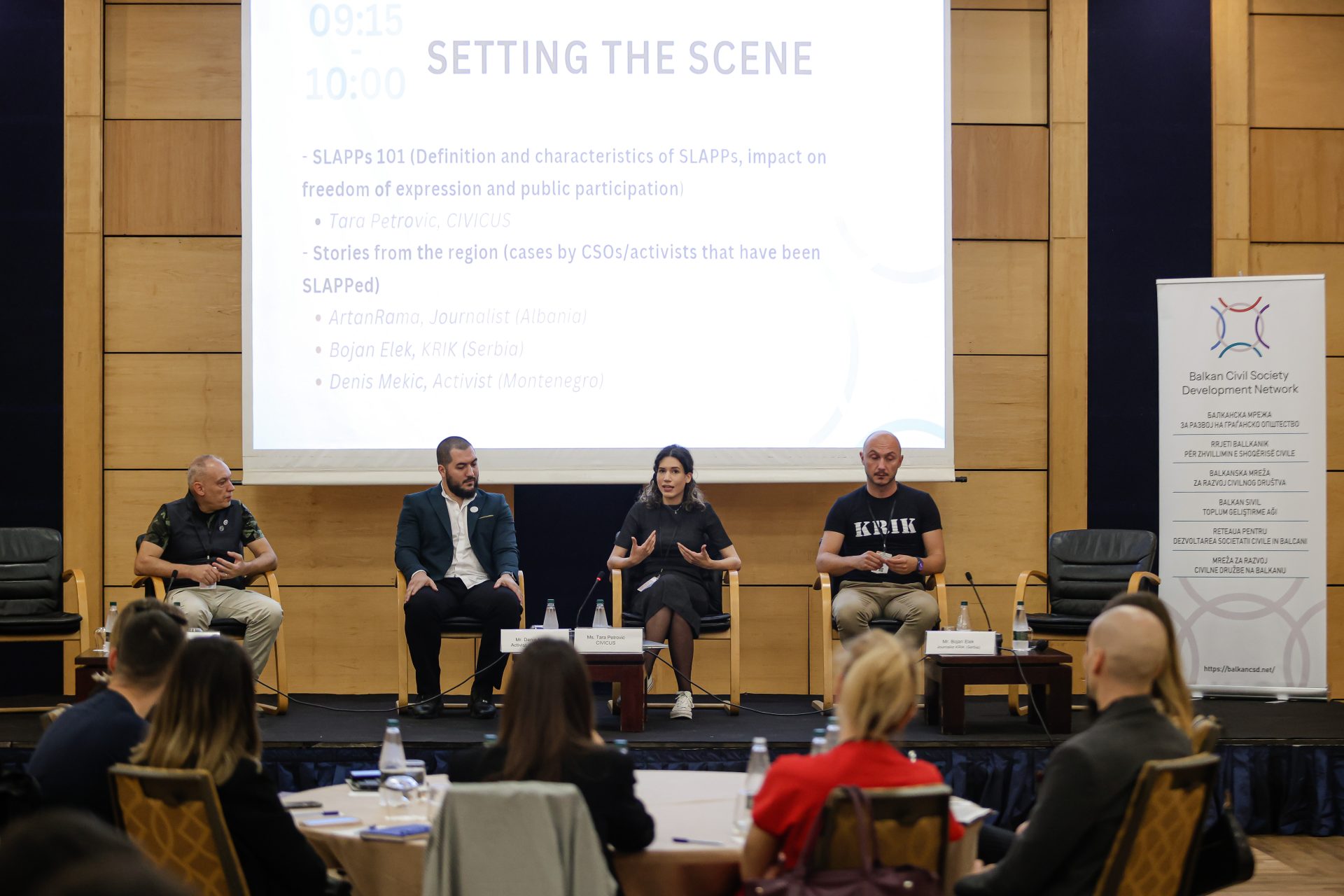 Kicking off the workshop, Tara Petrovic from CIVICUS Global Alliance provided a comprehensive definition of SLAPPs and highlighted the harmful impact on freedom of expression and public participation in the region, outlining SLAPPs background across the USA and Europe. Activists and journalists Artan Rama from Albania, Bojan Elek from Serbia, and Denis Mekic from Montenegro, shared their personal SLAPPS experiences underscoring how these lawsuits stifle free speech and discourage activism, particularly in environmental and investigative contexts.
Artan Rama recounted facing a SLAPP lawsuit from Albtek Energy after publishing an article exposing the company’s extended concession for an energy plant in Elbasan. Denis Mekic shared the story of local protests against the Skrbuša mini-hydroelectric power plant to protect the river, exemplifying how legal actions intimidate activists. Bojan Elek from KRIK highlighted multiple SLAPP lawsuits against KRIK, aimed at financially draining the organization for its investigative reporting on government activities.
“Don’t give up if you are SLAPPED. If you are SLAPPED, then you are in the right direction of your mission in the fight for freedom of expression”. (Artan Rama)
Regional and EU Anti-SLAPPS Efforts
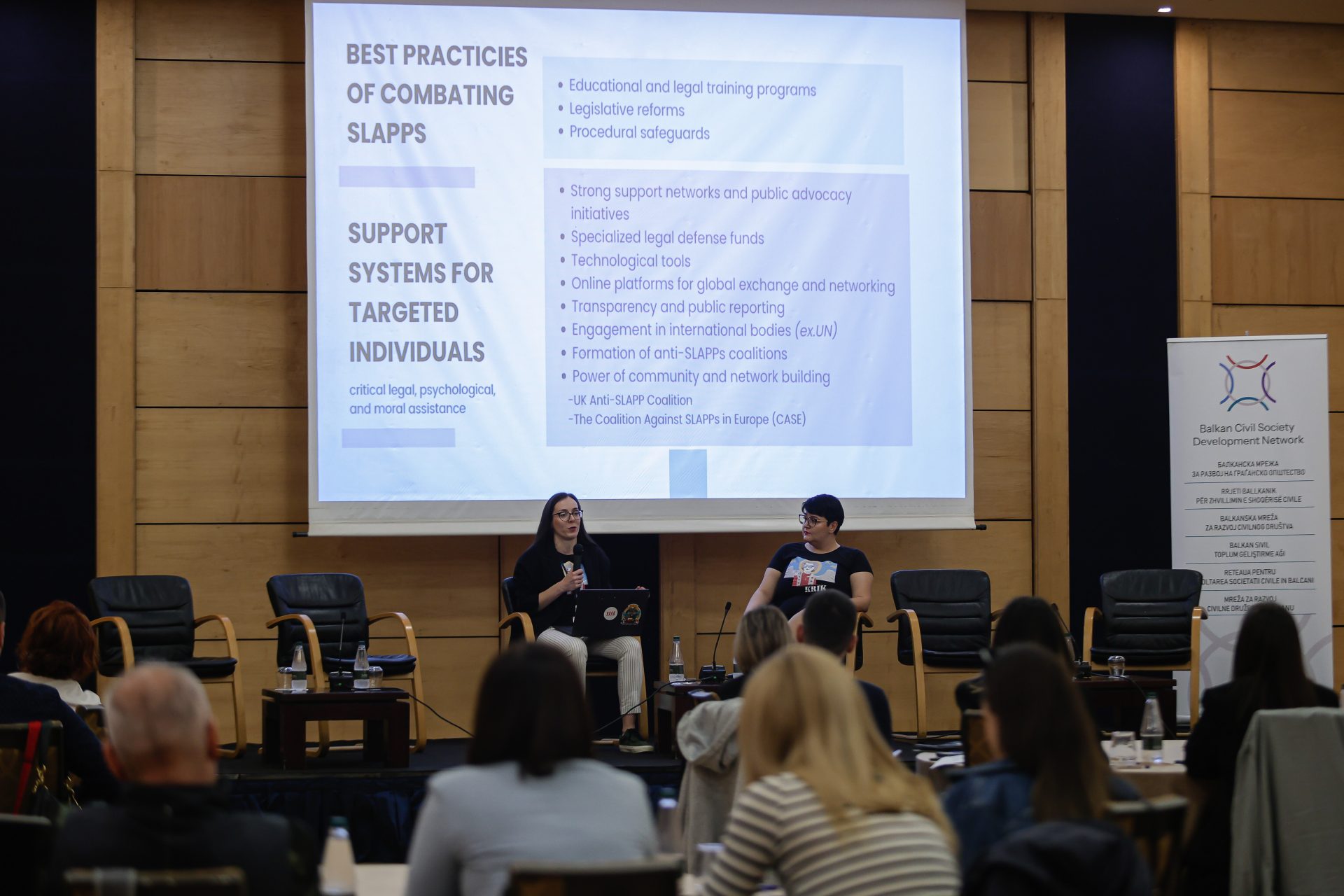 Anja Bosilkova-Antovska and Simona Mladenovska from the BCSDN Executive Office presented findings from the first-ever regional research on SLAPPs covering all six WB countries, which will soon be released, while BCSDN members’ representatives presented the key research findings on national level. The presentation highlighted the legal framework, common challenges, and trends in the region while addressing SLAPPS. Effective strategies to combat SLAPPs were shared, highlighting the need for raising public awareness and coordinated efforts at various levels.
During the workshop, lawyer Aleksandar Jokic analyzed the Anti-SLAPP initiative in Bosnia and Herzegovina, proposed by environmental activists in Federation BiH to provide safeguards to citizens, activists, and journalists from such lawsuits. He highlighted that the primary issue is the close ties between politicians and corporations, which significantly hinder the passage of the Law on Citizens’ Initiative and Protection of Citizens and Activists in the FBiH. Karmen Turk, the Chair of the MSI-SLP of the Council of Europe explained the recently adopted EU Anti-SLAPP Directive and its implications, emphasizing the importance of international pressure to drive change. Turk stressed the necessity of implementing safeguards like early dismissal tools and remedies, including compensation for all costs and penalties for the claimants. Vladyslava Kaplina from the Business & Human Rights Resource Center (BHRRC) provided a global perspective on SLAPP trends, sharing data on attacks against human rights defenders. Her presentation on BHHRC report People power under pressure: Human rights defenders & business in 2023 highlighted the global scale and distribution of these attacks, emphasizing the need for a unified definition of SLAPP and the distinction between private and public entities as plaintiffs in SLAPP cases.
Responding to SLAPPs
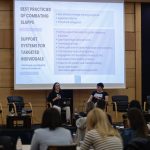
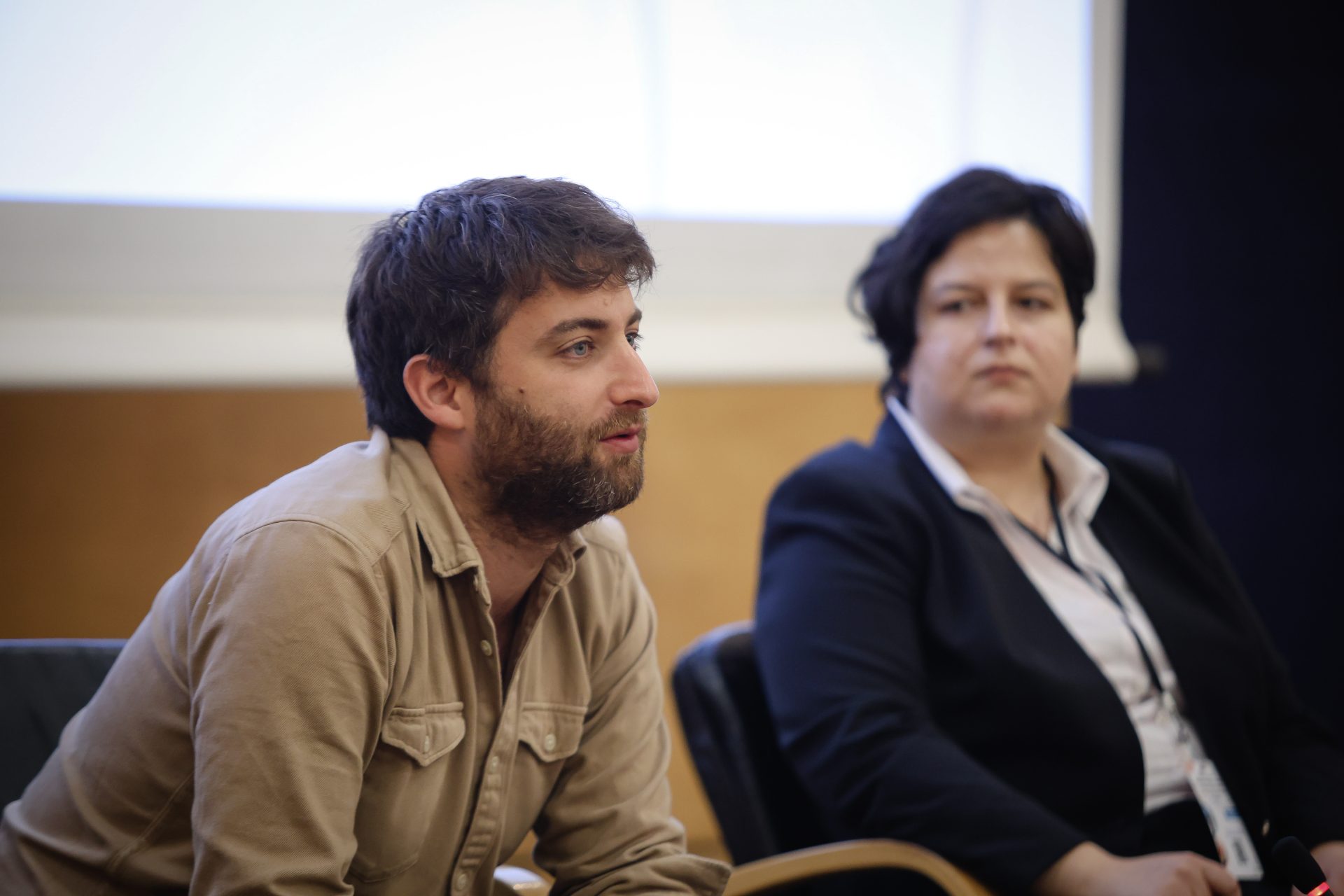 Focusing on the responses against SLAPPs, Ana Bianca Oprea from FDSC highlighted that robust legal strategies and identifying patterns in SLAPP cases are crucial in combating these lawsuits. Matthew Caruana Galizia from the Daphne Foundation shared the personal story and the tragic case of his mother, the Maltese investigative journalist Daphne Caruana Galizia, who faced numerous defamation lawsuits before her death, and the role of Daphne foundation to prevent similar abuses of the legal system in the future. Katarina Tadic from EFB discussed the significance of access to resources and solidarity for communities targeted by SLAPPs.
“The fight against SLAPPs is a fight for the fundamental rights of expression and participation. Our collective efforts and solidarity will pave the way for a more just and free society.” (Matthew Caruana Galizia)
The event finalized with identifying key priorities for national actions to prevent and combat SLAPPs, formulating country-specific action plans, and pinpointing essential stakeholders and potential partners. Participants emphasized the importance of regional cooperation and the need to link national activities with broader regional efforts for a comprehensive approach to combating SLAPPs.
Conclusion and Future steps
The SLAPPs Multistakeholder Workshop was a crucial step towards safeguarding civic space in the Western Balkans. It provided a platform for stakeholders to share experiences, learn from each other, and develop effective strategies to combat SLAPPs. The workshop’s collaborative approach and commitment to action are promising for future efforts to protect freedom of expression and public participation in the region.
During the event, key action items were discussed, including:
- CSOs should raise awareness and track both SLAPP cases and other attacks on human rights defenders. CSOs networking, information sharing and creating synergies could provide more effective response in early detection and warning of SLAPPs.
- The European Union should implement and monitor the transposition of the SLAPP directive into national laws of member states.
- National governments should consider tailoring legislation to address SLAPP cases in the context of public and private entities.
- The judges and public prosecutors should acquire adequate education about SLAPPs .
The workshop concluded with a strong message of hope and resilience:
“Together, we can build a future where SLAPPs are no longer a tool for silencing voices but a reminder of our collective strength and determination.”
Want to learn more about SLAPPs and BCSDN’s work on the issue?
Follow our communication channels for the upcoming release of the first regional report on SLAPPs and a comprehensive report from the regional multistakeholder workshop.
We recognize SLAPPs as crucial topic related to one of the key standards for ensuring an enabling environment for civil society in WBT – the legal guarantees and respect of the fundamental freedoms of association, assembly and expression.